Papers: AI Knowledge and Practice

Starts at
Tue, Aug 4, 2026, 14:30 KST
Finishes at
Tue, Aug 4, 2026, 16:30 KST
Venue
Room A
Moderator
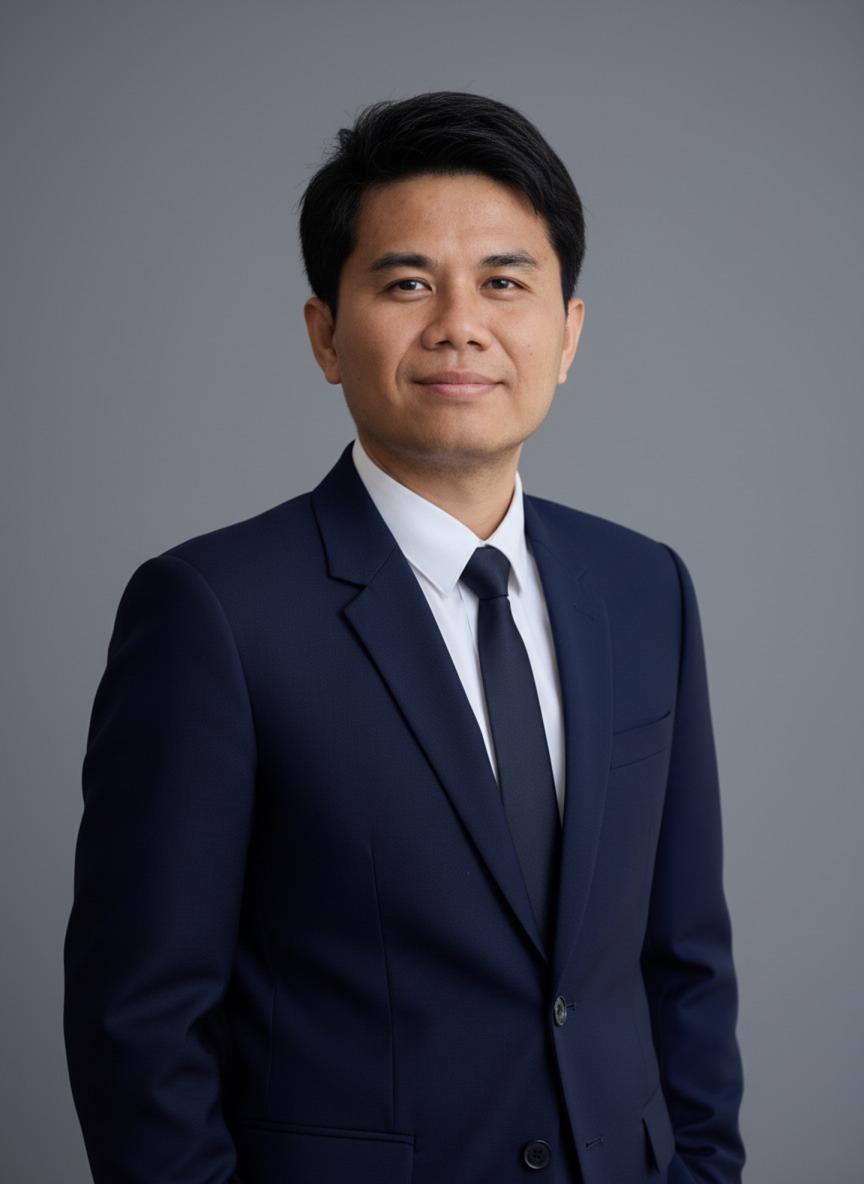
Miquel Centelles Velilla

Moderator

  • Miquel Centelles Velilla

    Universitat de Barcelona

    Miquel Centelles is a professor at the Faculty of Information and Audiovisual Media, University of Barcelona. With a background in Library and Information Science and Philology, his teaching and research focus on knowledge organisation, information representation, metadata, and semantic technologies for information and knowledge management. He coordinates the UB Master’s in Digital Humanities and is a member of CRICC. He is currently a researcher in HerStory&NeSyAI, a project on women’s history, information architecture, and neuro-symbolic AI applied to Francoist repression case studies.

Presentations

Reconstructing Metadata Literacy in the AI Era: A Conceptual Framework and Educational Reflections for LIS Education

Authors: Ba Xi, Nurussobah Hussin and Hanis Diyana Kamarudin

This paper calls for a rethinking of metadata literacy in the age of AI. Previous discussions often defined metadata literacy as knowledge of descriptive structures or skills in creating and using metadata records. But this understanding is no longer enough – though still necessary – when AI systems create, transform, rank, summarise and recommend information at scale. In such environments, metadata is not simply about post hoc description of resources; it structures provenance, visibility, accountability, cultural representation, and the conditions under which machine outputs can be interpreted and trusted. Using metadata, metadata instruction, AI literacy, and information literacy scholarship, this conceptual paper presents a reconstructed model of metadata literacy for LIS education. The model is built on five dimensions: understanding of infrastructure, contextual description and representation, provenance and disclosure, evaluation of algorithmically mediated outputs and intervention in terms of ethics and governance. The paper also gives examples of learning tasks and assessment evidence to illustrate how the model can be applied. It argues for viewing metadata literacy not as a narrow technical specialisation but as a fundamental educational response to AI-mediated knowledge environments.
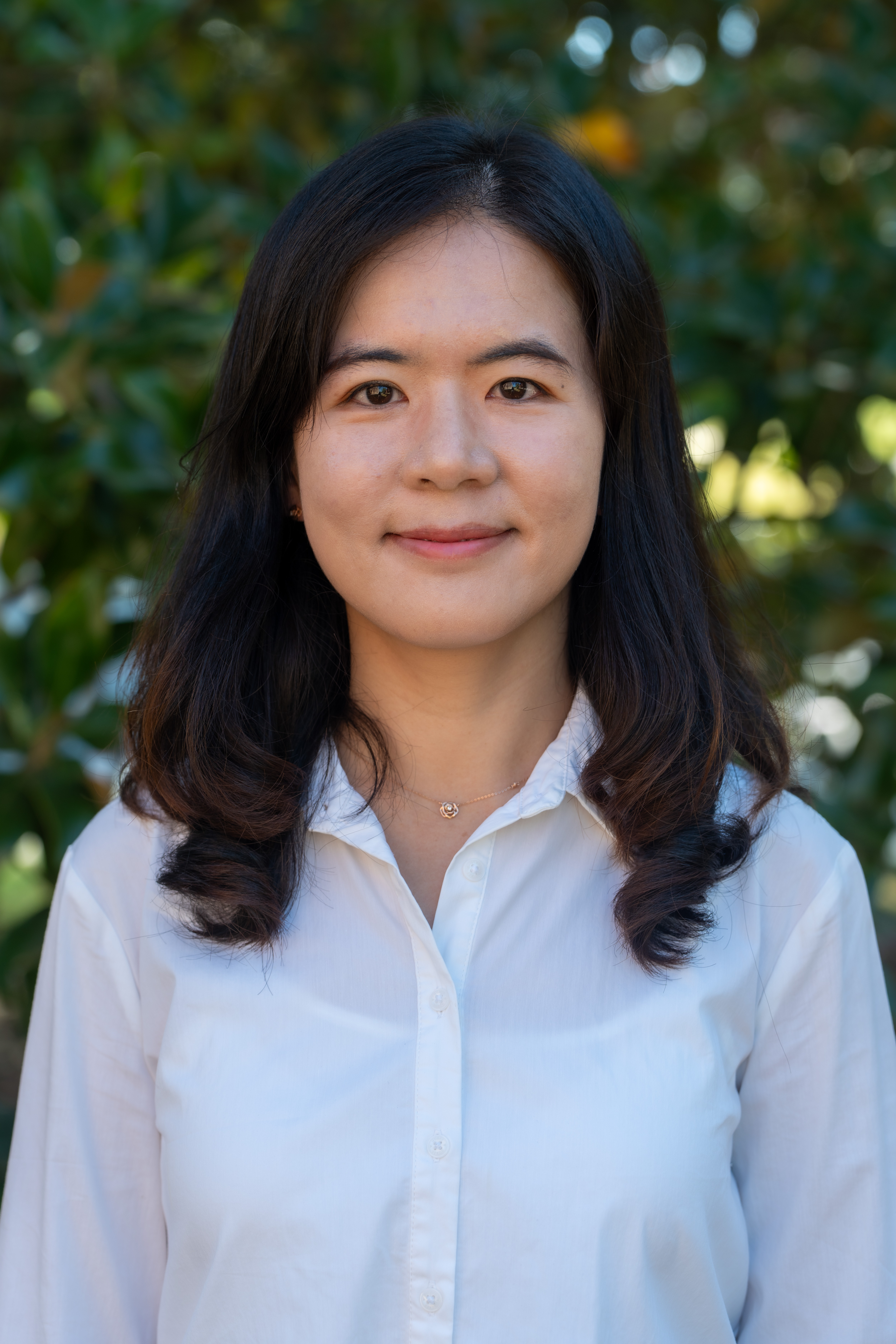
  • Ba Xi

    Faculty of Information Science, Universiti Teknologi MARA

    Ba Xi is a PhD candidate in Information Management at the Faculty of Information Science, Universiti Teknologi MARA. She currently works at a university in China. Her research interests include AI literacy, community libraries, and infopreneurship. Her doctoral research focuses on the development of an AI literacy framework for Library Science students in China. Her work explores how emerging AI technologies are reshaping Library Science education, information practice, and the development of students’ professional competencies in academic and professional contexts.

Motivations for Participating in Biomedical Ontology Communities within Human-AI Collaboration

Authors: Jiwoo Seo

This paper presents a literature-based synthesis of motivations for participating in biomedical ontology communities, viewed as metadata infrastructures. As generative AI transforms ontology curation into human-in-the-loop workflows, human engagement becomes essential for ensuring metadata quality. Using Self-Determination Theory and Activity Theory, it identifies four themes—intrinsic motivation, extrinsic motivation, community aspects, and human AI collaboration—and analyzes their impact on autonomy, competence, and relatedness. Based on these themes, the study proposes practical implications for provenance-enhanced verification, quality-based incentives, and collaborative environments to sustain metadata quality and ongoing contributions.
  • Jiwoo Seo

    Florida State University

    Jiwoo Seo is a Ph.D. student and Research Assistant in Information at Florida State University, studying human-AI collaboration and ontologies. With an interdisciplinary background spanning library and information science and web science, her research examines how humans and AI systems collaborate. Previously, she worked as an NLP researcher in corporate AI labs and as an AI specialist librarian. At DCMI 2026, she presents a motivation-based conceptual framework applying Activity Theory and Self-Determination Theory to enhance user participation in metadata and biomedical ontology communities.

Help or hype?: Standardizing date metadata with AI

Authors: Annamarie C. Klose, Scott Goldstein

There is a wide variety of date metadata practices employed by professional, paraprofessional, and volunteer catalogers and metadata creators. The lack of standardization in date metadata inhibits discovery. While normalization routines can be created to improve metadata, the sheer scale of date values and types of date formats can make that time consuming and onerous. As artificial intelligence (AI) is employed in metadata work, this paper addresses its potential usefulness in standardizing date metadata in more frequently used scenarios. In this exploratory study, the researchers employed several freely available AI chatbots: ChatGPT, Claude Sonnet, and Gemini.
  • Scott Goldstein

    Coordinator, Web Services & Library Technology

    McGill University

    Scott Goldstein is the Coordinator of Web Services and Library Technology at McGill University. His research interests include metadata quality, digital humanities, technology in libraries, and meta-research.

AI-Guided Metadata Construction for Meaning-Driven Digital Knowledge Systems: A Framework for Automated Metadata Generation and Semantic Discovery

Authors: Wirapong Chansanam, Umawadee Detthamrong, Chunqiu Li, Abdul Rahman Ahmad, and Avshalom Elmalech

The rapid expansion of digital repositories and scholarly resources has increased the demand for scalable and intelligent metadata management systems. Traditional metadata creation methods, which rely on manual cataloguing by information professionals, struggle to keep pace with the growing volume and heterogeneity of digital content. This study develops and evaluates an AI-guided framework, Metadata-Building-AI-Guidance V.1.0 that combines document ingestion, chunking, OpenAI text-embedding-3-small embeddings, and the gpt-4o-mini large language model into a single Streamlit application supporting both automated Dublin Core-aligned metadata extraction and embedding-based semantic retrieval. We position the system as a design-science artefact in which retrieval is not a side feature but a feedback loop: the same vector index that powers similarity search is also used to surface the contextual chunks from which structured metadata are extracted and to support retrieval-augmented question answering over uploaded collections. The system was evaluated on a purposively sampled corpus of 30 open-access academic documents and 20 expert queries, using (i) field-level F1 against librarian-curated ground truth with Cohen's κ for inter-annotator agreement and (ii) Precision@5 and Mean Reciprocal Rank with binary relevance judgements from two librarians. Field-level F1 ranged from 0.67 to 0.73 for dc:title, dc:creator, dc:subject, and dc:description, with overall κ = 0.83 (almost perfect agreement); the lowest F1 was 0.57 for dc:type, traced to a fixed generic prompt output rather than to a model-capability limitation. Semantic retrieval reached Precision@5 = 0.61 and MRR = 0.69 with κ = 0.66 (substantial agreement) across the 20 queries. We discuss the limits of LLM-only evaluation—including the absence of a head-to-head comparison with established non-LLM extractors such as GROBID—and identify controlled baseline comparison together with a refined dc:type prompt as the immediate next steps. Prompts, JSON schema, library versions, sampling log, and evaluation queries are released to support replication. The contribution is a reproducible reference implementation that aligns AI-assisted metadata extraction with Dublin Core Terms and the FAIR principles for digital libraries, archives, and cultural-heritage repositories.
  • Avshalom Elmalech

    Researcher

    Bar-Ilan University

    Avshalom Elmalech is a researcher at Bar-Ilan University with a PhD in Computer Science, working at the intersection of applied artificial intelligence and digital humanities. His research bridges information science and AI by examining how deep learning methods can be effectively applied to humanities data. He has contributed practical frameworks for guiding digital humanities scholars in choosing and adapting NLP and deep learning approaches under constraints such as limited training data and domain specificity.
  • Wirapong Chansanam

    Associate Professor

    Khon Kaen University

    Wirapong Chansanam is an Associate Professor of Information Science at Khon Kaen University, Thailand. He earned his Ph.D. in Information Science in 2014 and currently serves as Head of the Information Science Department and Chair of the Digital Humanities Research Group. His research focuses on information science, ontology, knowledge organization systems, linked open data, and data analytics. He actively contributes to advancing digital knowledge management and innovation.

Automated Classification of Chinese Books: A Large Language Model Approach to Knowledge Transfer and Domain Adaptation

Authors: Xin Yang, Junzhi Jia, and Ying-Hsang Liu

Automated subject indexing remains a critical challenge for digital libraries and knowledge organization systems. To address this issue, this study develops a knowledge-augmented domain adaptation framework that aligns general-purpose language models with the hierarchical logic of the Chinese Library Classification (CLC). A supervised fine-tuning (SFT) strategy is proposed to resolve domain knowledge drift and deep-category recognition bottlenecks in large language model (LLM)-based Chinese book indexing, using dual bibliographic and category data. Three evaluation experiments were conducted to assess the effectiveness of the proposed techniques for quantifying ontological contributions: hyperparameter sensitivity analysis for baseline establishment, backbone model comparison for architectural fitness, and knowledge injection ablation for. Results demonstrate that dual-data fine-tuning significantly enhances precision for long-tail and fine-grained categories. While ensuring high-quality output, the solution features low computational thresholds, robust local deployment, and high scalability, effectively internalizing knowledge organization systems within LLMs. By bridging the gap between classical theory and generative AI, this work provides a high-accuracy, institutionally autonomous solution for automated indexing, offering substantial theoretical and practical significance for the intelligent transformation of digital libraries.
  • Yang Xin

    none

    Renmin University of China

    Xin Yang is a Ph.D. candidate in Information Science at the School of Information Resource Management, Renmin University of China. He holds an M.S. in Library Science from Sun Yat-sen University and a B.S. in Archival Science from Sichuan University. His research focuses on knowledge organization, digital humanities, and automated bibliographic cataloging. His recent work involves leveraging large language models (LLMs) and multi-agent workflows to optimize automated library classification systems.

Grounding AI Subject Cataloguing in Standards and Policy: An MCP Server for Live LC Authority Lookup and a DITA-Encoded SHM for RAG

Authors: May Chan

Large language models (LLMs) applied to subject cataloguing using Library of Congress Subject Headings (LCSH) tend to generate headings and strings that are syntactically plausible but policy-invalid, bypassing the controlled vocabularies and governing rules that subject collocation depends on. This paper describes a two-track experiment to address the lack of grounding in standards and policy. The first track is lc-vocabularies-mcp, a Model Context Protocol (MCP) server connecting an LLM to live Library of Congress (LC) linked data APIs, enabling real-time authority validation for LCSH and related controlled vocabularies. The second track is a conversion of the Subject Headings Manual (SHM) from PDF to structured DITA (Darwin Information Typing Architecture), designed as a machine-actionable retrieval-augmented generation (RAG) corpus. Together, the two tracks support a five-part subject cataloguing workflow in which non-parametric knowledge is supplied to Claude at each part where parametric knowledge alone is insufficient. The paper reports on the architecture of lc-vocabularies-mcp, the DITA conversion methodology, and an evaluation design that tests whether policy-grounded retrieval improves AI-assisted subject cataloguing.
  • May Chan

    Head, Metadata Services

    University of Toronto

    May Chan is Head, Metadata Services at the University of Toronto Libraries, with 17 years of prior experience in public libraries at Vancouver and Burnaby, British Columbia. A Carpentries Instructor Trainer, she is committed to building computational and technical literacy among library practitioners, and has been active in cataloguing training and professional development in a variety of roles throughout her career. May currently serves as co-chair of the PCC Standing Committee on Training and the SCT Linked Data Training Task Group.

Does AI-Encoded Meaning Align with Human Meaning?

Authors: Zhenhua Wang, Aixin Yao and Ming Ren

AIs are increasingly used to support metadata processing and investigation, which depends on whether AI-encoded meaning aligns with human meaning. However, AI encodes word meaning through distributional and contextual representations, and it remains unclear whether such representations preserve the meaning value of human system. We answer this question through Zipf’s meaning law, which links word frequency to number of word meanings. We compare multiple AI-induced meaning estimates with human-measured meaning. To quantify alignment, we propose Meaning-Zipf Deviation (MZD), which covers continuous meaning distributions and measures their divergence with reliability adjustment. Extensive experiments show that human words consistently follow Zipf’s meaning law. AI-encoded meanings also exhibit Zipfian regularities, inheriting part of the statistical structure of human language. However, AI meaning distributions remain flatter than human distributions, with lower scaling exponents and non-negligible MZD values. Larger models do not reduce this gap. AI tends to bind words to context-conditioned senses rather than preserve their broader polysemous potential.
  • Ming Ren

    Vice Dean

    School of Information Resources Management, Renmin University of China

    Ren Ming is a Professor, Doctoral Supervisor, and Vice Dean at the School of Information Resource Management, Renmin University of China. Her research focuses on big data analytics and applications, AI, and data element markets. She has led multiple national-level research projects, published in leading journals such as JASIST, JOI, TOIS, authored two academic monographs, and led the annual Data Element Marketization Promotion Index report. She serves as a committee member in national and professional societies related to information technology, knowledge organization.

AI in Knowledge Organization: Is There a Problem with AI representation?

Authors: Lala Hajibayova

Applying the theory of representation, in this paper it is argued that the limitations of AI generated solutions are due to AI’s lack of multifaceted cultural, historical and situational contexts and beliefs that constitute the fabric of the authoritative knowledge. This paper suggests that the problem of AI is not so much of the scale of the data on which it is trained as it is the lack of depth and quality of data that represents the contextual and situated knowledge produced by human experience and cognition.
  • Lala Hajibayova

    Professor

    School of Information, Kent State University

    Lala Hajibayova is a professor at the School of Information, Kent State University, United States. Hajibayova's research examines interplay between individuals' contextualized experiences, patterns and behaviors of engaging with systems and the potential of individuals' collective actions to enrich systems of representation, organization and discovery. Hajibayova serves on editorial boards of the Journal of the Association for Information Science & Technology and the Annual Review of Information Science & Technology.